'Happy Together' (1997) Film Review
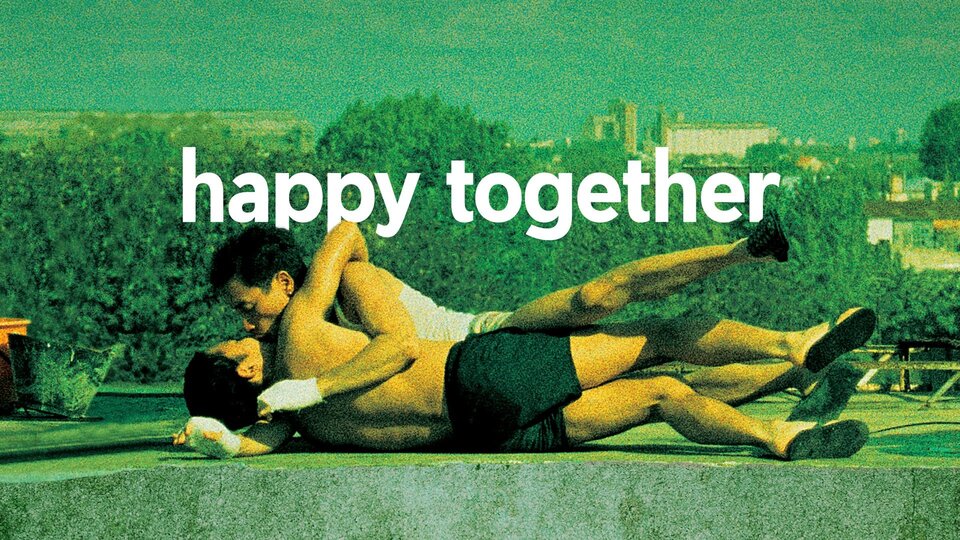
Wong Kar-wai’s 1997 film Happy Together was groundbreaking in its time, being one of the first queer movies to portray its central characters as people, not just queer people. Filmed and set shortly before the Handover of Hong Kong, it takes place largely in Argentina, which sits directly opposite Hong Kong on the globe. There is a profound sense of homesickness in this film, a yearning both for home and for human connection. The dislocation is not just geographical but emotional too.
The two central characters, Lai Yiu-Fai and Ho Po-Wing, are a young Hongkonger couple in a tumultuous on-again off-again relationship, one that could be described in therapy language as codependent and deeply toxic. After breaking up once again, this time on holiday, they become stranded in Buenos Aires. Despite attempting to leave for good, Fai finds himself caring for an injured Po-Wing in his claustrophobic studio flat, and they spend the rest of the film fighting, making up, sleeping around, drinking excessively, and sabotaging themselves and each other.
The honesty with which they are portrayed is startling. The flamboyant and manipulative Po-Wing is clearly not a good match for the brooding and occasionally violent Fai. They are unable to leave each other, so presumably there is some kind of love there, but the audience never really gets to see this. We never see the highs, only the lows at the end of a relationship that should have ended long ago. Despite the physical beauty of this film, it is grindingly miserable.
Unlike many queer films of the era, homophobia is not a major character here. This isn’t a story of a gay couple versus the world, it’s the story of a gay couple versus each other. The plot wouldn’t change dramatically if they were straight. Wong himself has stated that “I don’t like people to see this film as a gay film. It’s more like a story about human relationships and somehow the two characters involved are both men.” But having said this, there is a clear undercurrent of alienation - Fai knows, pragmatically, that he cannot out himself to his coworkers. He struggles with the fact that his father doesn’t accept him. As we witness Fai’s acute loneliness, his relationship with Po-Wing begins to make sense; neither of them has anybody else to rely on.
But the tenderest moments of the film are between Fai and Chang, who works alongside him in a kitchen, and who is implied to be in the closet himself. A sweet and caring young man, Chang is too naive to realise Fai’s attraction to him. Much of the film’s third act focusses on their growing friendship, and Fai’s struggle to accept his feelings for somebody who represents everything he wants but can’t have. He is smitten with Chang, but terrified to reveal too much and drive him away.
It always sounds pretentious to say this, but Happy Together is a film about the human condition. Both Fai and Po-Wing are unlikeable but frighteningly relatable characters - although their actions are frustrating from the outside, it is a human inclination to look for love in the wrong places. We know these characters. Unfortunately, we might even be them.
By Sid Phoebus